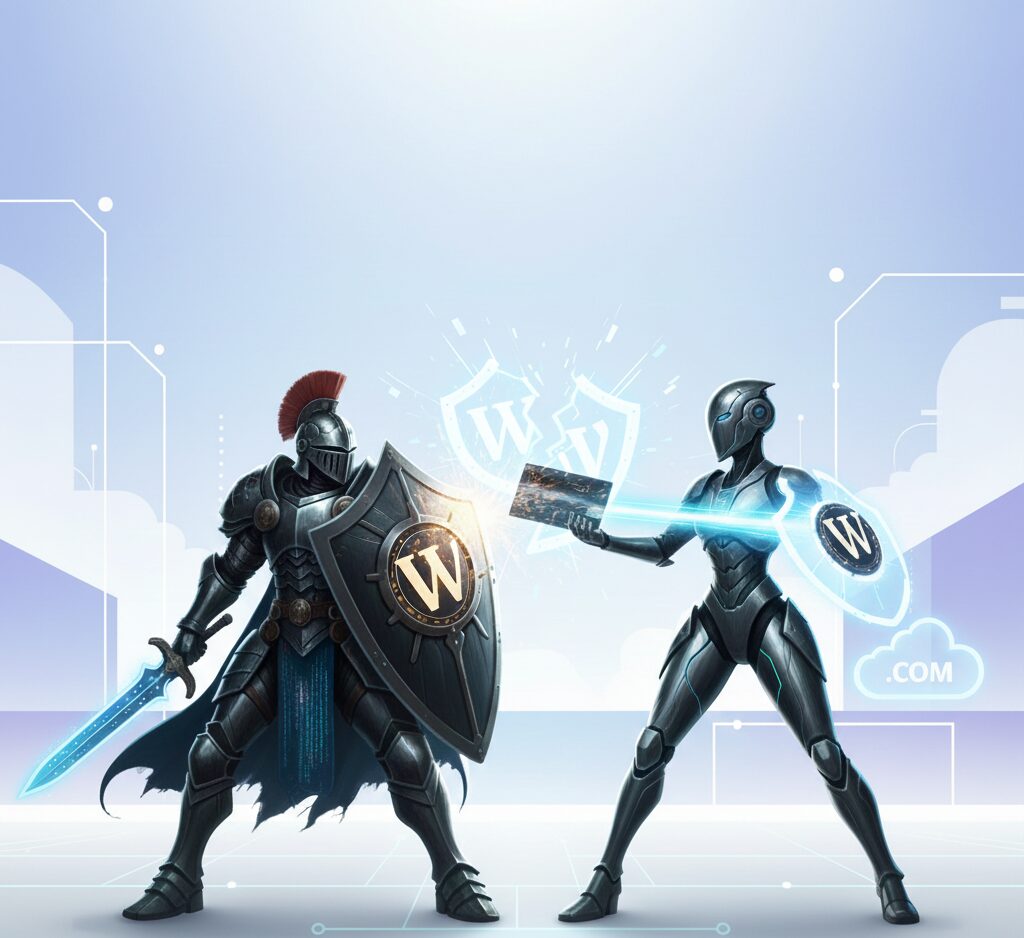
The question is not which platform is “better,” but which platform is the right one for your objective. Choosing between them is the first (and most important) business decision you’ll make before writing your first line of code or your first post.
The fundamental difference is the one I hinted at: total control versus maximum convenience. But let’s look at what this really means in terms of business implications and consequences.
🚀 The Strategic Decision: Are You an Owner or a Tenant?
1. ⚙️ WordPress.org: The Estate Owner (The Non-Negotiable Power)
If your project has even the slightest intention of generating income, scaling, or becoming a professional asset, you must go with WordPress.org. It is not a suggestion; it is a necessity.
✅ The Value Proposition:
- Unlimited Freedom (Plugins and Themes): On WordPress.org, if you can dream it, you can install it. Need a CRM? A plugin. An advanced booking system? A plugin. Surgical-level speed optimization? A plugin. This unlimited extension capability is the growth engine of any digital business.
- Monetization Without Intermediaries: Want to sell courses? Place high-CPM ads? Create a paid membership area? You don’t have to pay a commission to anyone. The money your website generates is yours.
- High-Impact SEO: You have total access to the .htaccess file, advanced caching tools, and the best SEO plugins. This gives you absolute control over how Google’s robots crawl and index your site, which is vital for organic traffic.
- Asset Ownership: Your website is on hosting that you pay for and manage. If your hosting provider fails you, you switch providers. No one can shut down your website because you “violated their terms of service” or because your blog became too popular and consumed resources.
⚠️ The Cost of Freedom (The Pending Task):
- Learning Curve: You have to learn how to set up a hosting account, install WordPress (although many hosts do this for you), manage backups, and keep everything updated. It requires more time initially.
- Initial Investment: You have to pay for hosting and a domain. Although it’s inexpensive, it is a cost you can avoid at the beginning with WordPress.com.
2. 🌐 WordPress.com: The Convenience of the Blue Pill (Simplicity with Chains)
If your goal is simply to have an online diary, practice your writing, or maintain an online résumé without worrying about traffic, SEO, or sales, WordPress.com is the fast track.
✅ The Value Proposition:
- Launch in Minutes: You open an account, choose a name, and that’s it! They handle all the technical aspects: hosting, security, and backups. It is ideal for those with a phobia of technical configuration.
- Direct Support: If something breaks, you have a support team to help you fix it (though this depends on the plan you pay for).
⛔ The Consequences of Simplicity:
- Plugin Restriction (Long-Term Failure): If you use the free or Personal plan, you are locked down. You cannot install essential plugins like WooCommerce (for sales), advanced lead magnet systems, or visual page builders like Elementor. Your website is condemned to be basic.
- Mandated Advertising: On the free and lower-cost plans, WordPress.com may display its own advertising on your site, diluting your brand and without you earning a single cent from that advertising.
- Monetization Limits: If you want to sell advertising or use affiliate systems that they don’t control, you’ll have to be on a very expensive plan. In essence, they regulate how much money you can earn from your own effort.
- Less SEO Control: Although basic features are available, you cannot manipulate granular SEO aspects as you can in the .org version, which reduces your power in the fight for the top positions on Google.
🎯 The Strategic Conclusion for Your Reader
If you are reading a blog about digital strategy, the answer is simple:
- If your project is a hobby with no business aspirations, use WordPress.com.
- If your project is a brand, a business, or intends to generate income (even in the future), use WordPress.org and purchase good hosting from day one.
Do not sacrifice flexibility and control for the convenience of a weekend setup. What you save today on a cheap WordPress.com subscription will cost you ten times more tomorrow when you need to migrate all your content to WordPress.org because your business grew and you ran out of options.